
Top Fertility Tips for Women Over 35 (From a Naturopathic Fertility Doctor)
If you're trying to conceive after 35, you've probably already done what most women do first: lots of Googling.
Online, you’ll find endless lists of supplements, conflicting advice, and stories from TTC forums. I often see clients trying to conceive come to me doing all the things, yet they still aren't pregnant. They’re spending a fortune on supplements, running endless lab tests, and piecing together advice from every corner of the internet.
More is not always better. What actually moves the needle is a clear, strategic approach.
But first…
Why does fertility become more difficult after 35?
The reality is that fertility decreases over time. That doesn’t mean pregnancy isn’t possible–many women are able to conceive both naturally or with support in their late 30s and early 40s. But understanding what changes can help you approach fertility more strategically.
Here are some of the most important factors:
1. The Number of Eggs Declines Over Time
Women are born with all the eggs they will ever have. Over time, that supply naturally decreases. By the mid-to-late 30s, many women have a lower ovarian reserve compared to their younger years.
Markers like AMH (Anti-Müllerian Hormone) and antral follicle count can help estimate egg reserve, although they don’t tell us about egg quality.
2. Egg Quality Changes With Age
In addition to the number of eggs declining, egg quality can also change over time. Eggs are particularly sensitive to:
Inflammation
Stress
Blood sugar imbalance
Environmental toxins
Nutrient deficiencies
These factors accumulate over decades, though optimizing health in the months leading up to conception can make a meaningful difference (I write more about egg quality here).
3. Ovulation Becomes Less Consistent
Hormonal patterns shift as women move through their late 30’s and early 40’s. Some women begin experiencing:
Shorter or longer cycles
Irregular ovulation
Lower progesterone levels after ovulation
This is one reason why tracking ovulation accurately becomes so important.
4. Chronic Health Conditions Take A Toll
By the mid-30s, many women are also navigating other health issues that can affect fertility. Common examples include:
PCOS
Endometriosis
Thyroid dysfunction
Insulin resistance
Chronic inflammation
These conditions are often underdiagnosed or under-investigated, which is why more comprehensive fertility evaluation can be so valuable.
Improving fertility over 35 isn’t about doing more–it’s about focusing on what actually matters.
Here are the five things I prioritize with my patients:
1. Learn When You're Actually Fertile
One of the most common issues I see is that women aren’t timing intercourse during their true fertile window.
Your fertile window is the 3-4 days leading up to ovulation, the day of ovulation, and the day after. Even if you’re using a period tracker app, it’s just guesstimating, and you might be missing your window entirely.
Ovulation tracking can include:
Tracking cervical mucus
Ovulation predictor kits (OPKs)
Basal body temperature (BBT)
If you're missing your fertile window, you’re not going to become pregnant. You can read more about how to track ovulation & identify your fertile window here.
2. Balance Blood Sugar (Most Surprising, but very Impactful)
Many women are surprised when I talk so much about blood sugar in a fertility appointment. But insulin levels strongly influence your egg quality, hormone health, and inflammation levels.
Even women without diabetes or PCOS can benefit from improving metabolic health. The basics I recommend to nearly every fertility patient include:
Eat breakfast every day.
If you’re going to do one thing, this is it. Skipping breakfast or eating only carbs in the morning can destabilize blood sugar for the rest of the day. Eat breakfast within an hour of waking and aim for 25-30g of protein with breakfast.
Eat regular meals.
Avoid long stretches without food. Intermittent fasting is NOT recommended if you want to optimize fertility.
Include fiber and protein with every meal.
This helps slow glucose spikes and support hormonal balance. Good sources of fiber include apples, pears, prunes, oatmeal (especially steel-cut), chia seeds, beans, lentils, whole grains, avocados, and dark leafy greens.
These simple habits can significantly improve metabolic markers that affect fertility.
3. Reduce Environmental Toxin Exposure
Certain environmental toxins can interfere with hormone signalling, ovulation, and egg (and sperm) quality.
There are so many places these toxins can show up: personal care products, cleaning products, plastics, even our clothes and furniture.
It’s easy to get overwhelmed with this, so here’s where I recommend starting:
Avoid heating foods in plastic.
Swap plastic foodware and waterbottles for stainless steel/glass/ceramic.
Avoid the 3 “P”s: parabens, phthalates, and “parfum”, or synthetic fragrances. When in doubt, if you skim the back of a product and see any of these, don’t buy it. EWG.org has lots of resources to help you find products safe for your health.
Filter your drinking water.
You don’t need to eliminate everything overnight, but reducing exposures where possible can meaningfully lower the body's toxic burden during the months leading up to conception.
4. Avoid Alcohol, Excess Caffeine, Cannabis, and Tobacco
All of these can negatively impact your egg quality and your fertility. Here’s what I tell my clients:
No alcohol is the healthiest option for fertility. Before you even get a positive pregnancy test is when a developing baby is most susceptible to the effects of alcohol, so it’s best to avoid it entirely when you’re TTC.
No smoking, vaping, or cannabis.
Limit caffeine to one cup of coffee per day. There’s a higher incidence of hormonal issues and pregnancy loss with higher caffeine intake.
When preparing for pregnancy—especially after age 35—I typically recommend minimizing or eliminating these exposures during the 3-6 months before conception.
5. Address Stress and Nervous System Health
From a biological perspective, reproduction becomes a very low priority during times of high stress. Chronic stress can impact hormone signaling, blood sugar regulation, and inflammation levels.
If you’re under high stress:
Ask yourself: Can you reduce your workload? Do you need stronger boundaries?
If you can’t change your stressors, you need some sort of daily nervous system support: this could be walking, stretching, time outside, meditation, doing things that bring you joy, etc.
Prioritize sleep as much as possible.
Relationship communication: have conversations with your partner around timeline and expectations when it comes to TTC, changes with pregnancy/postpartum, finances, childcare philosophies, etc.
TTC? Don't Skip the Right Lab Work
Another major mistake I see is clients settling for a diagnosis of “unexplained infertility” because basic labs from a primary care doctor come back “normal”.
Here are the labs I frequently evaluate include:
Basic health markers: These are the absolute minimum I check in all of my fertility clients: CBC, Comprehensive metabolic panel, Ferritin, Vitamin D
Hormone testing: Day 3: FSH, LH, estradiol. 7 Days Post-Ovulation: Progesterone. Testosterone, DHEA-S, Prolactin, SHBG
Thyroid function: Many women are only tested for TSH. But a more complete thyroid panel often includes Free T3, Free T4, Total T3, and Thyroid antibodies
Metabolic and inflammation markers: Fasting insulin, hsCRP, Homocysteine, B12 and folate.
We don’t want to just see these numbers in a “normal” range–we want to make sure they are OPTIMAL. I go over this (and so much more) in my online course, Pregnancy Prep Package. If you’re looking for a more structured plan, explore my personalized fertility and preconception care offerings to get targeted support.
Case Study: Why a Targeted Fertility Plan Matters
A 38-year-old patient came to see me for support as she prepared for IVF. She was taking over 30 supplements and had compiled a massive list of fertility lab tests from online forums—tests that would have cost thousands of dollars.
The first thing we did? Simplify.
We reviewed her supplements one by one and:
Removed duplicates
Optimized dosages
Focused only on what was relevant for her situation
Then we approached lab testing strategically—focusing on the markers most likely to influence egg quality in the short time before her egg retrieval.
After three months:
→ Her antral follicle count increased from 4 to 13
→ Her AMH improved from 0.26 to 1.04
→ Her next IVF cycle was successful—she became pregnant!
That’s the power of targeted preparation–not doing more, but doing what matters.
Needing More Guidance?
Many of the women I work with feel overwhelmed by the amount of fertility advice online.
They’re not sure:
Which supplements actually matter
Which lab tests are worth running
What lifestyle changes will make the biggest difference
I developed a FREE resource to help clear through the noise and focus on what’s most important.
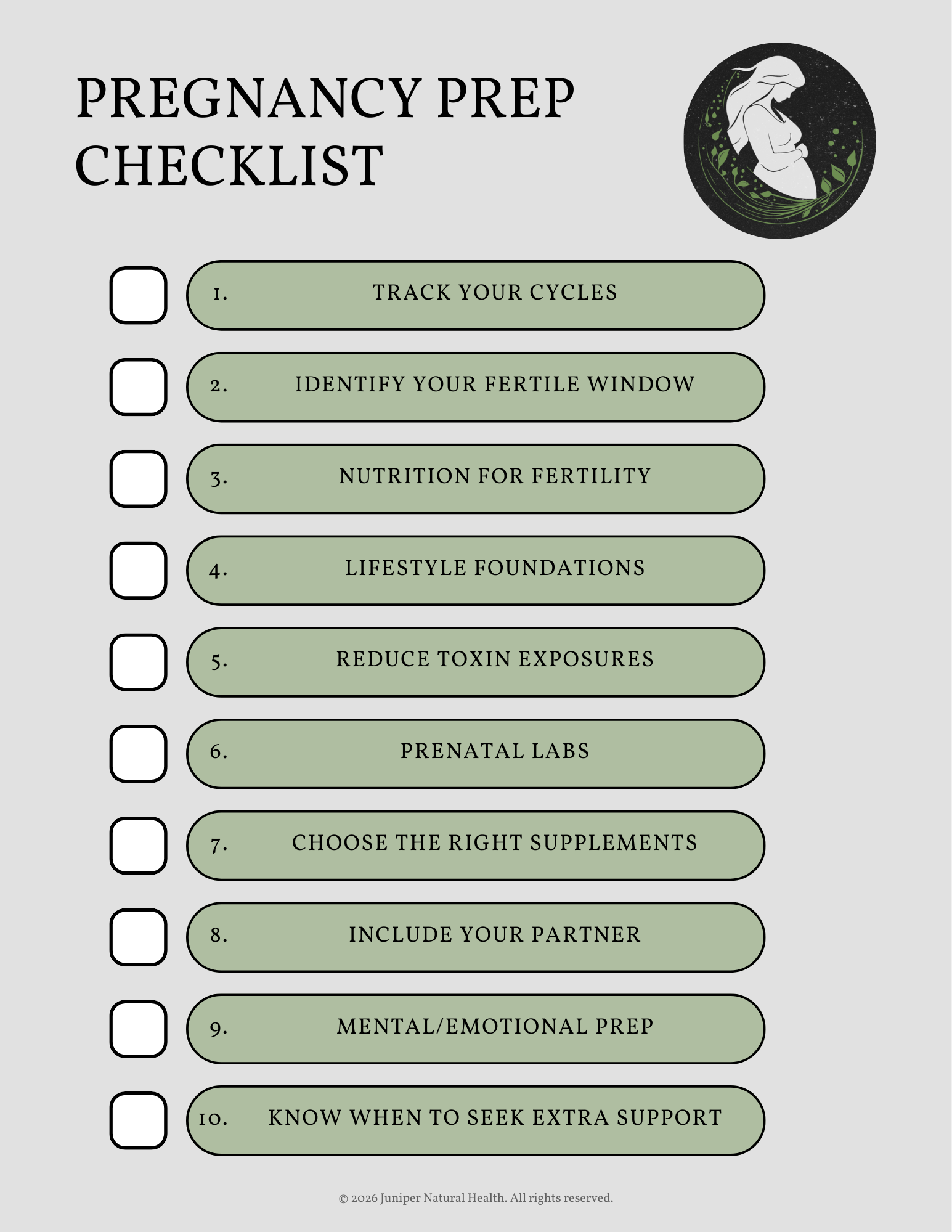
We break down each step so you…
Track your cycle and fertile window with confidence
Cover the most important concepts when it comes to diet & lifestyle
Learn how to reasonably reduce your environmental toxin exposures
Know what labs matter most
High-quality supplements to help support your fertility & egg quality
Some ways your male partner should be supporting their sperm health
Learn ways to support your mental & emotional health as you prepare for a baby
Recognize the signs that it might be time to reach out for additional support
Want a more individualized approach?
I offer 1:1 virtual visits to help you build a personalized supplement plan based on your unique health history, labs, symptoms, and fertility goals. Learn more about my personalized fertility and preconception care, and use the button below to get scheduled.
Disclaimer: The information in this article is intended for general informational and educational purposes only. It is not intended to diagnose, treat, cure, or prevent any condition, nor should it replace guidance from a qualified healthcare professional. Please speak with your provider about your individual health questions and before making any changes to your care plan.